Advice for trekking
Hiking Tips
Stop that flapping tent
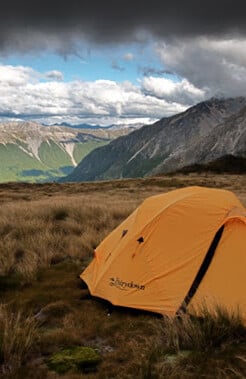
Can’t stop the bottom edge of your tent flapping noisily in the wind on stormy nights? Try loosening and tightening the straps, or re-pitching on level ground (not that we have any of that in New Zealand!). If that fails, tie a cord with a clove hitch around a bunch of the nylon at the bottom edge of the middle of one face. Peg it out about half a metre. This works best if it’s the vestibule face (if you lift the bottom edge of the tent too much above the ground driving rain can get under the edge). If you are a bit rough, just chuck a rock (5-10kg) on the flapping face and deal with it properly in the morning.
Survival of the fittest
It pays to be prepared for a first aid situation when you're in the wilderness as you are often some distance from help. Here are some handy items to have:
At our recent staff training course, which focuses on risk management and wilderness first aid, it was again highlighted to me the things that I should always have in my pack that could be extremely useful or even life saving in an emergency situation in our back-county.
Aside from all the specialty survival and first aid equipment, personal locator beacons, etc that are available, there are other things that can be on your “essential items” list that will have uses beyond emergency situations, such as:
Closed cell foam mat/bed roll– even if planning to stay in a hut, take one of these. Strap on to the bottom of your pack and it provides a great seat when you want to have a rest and in an emergency these are extremely useful for getting an injured person off the cold ground, they can also be used for immobilising joints eg broken arms and legs. Therma-rests work very well too.

Walking stick/pole – not only does a stick or pole make walking easier, they are invaluable if you suddenly have to erect an emergency shelter or for making splints for fractures. Make sure you have at least two in your party.
Lightweight fold-away saw – handy for firewood collecting but could also be great if you find yourself hurriedly trying to build a shelter or once again – making a splint out of sticks!
Chocolate – take a bar of chocolate and wrap it up in duct tape and keep it in the bottom of your pack, it will be there when you really need it and hopefully the duct tape will stop you munching on it when you don’t!
Sharp pocket knife – not only makes chopping your salami and cheese easier, but vital for wilderness first aid e.g. making make-shift bandages out of clothing, cutting bed rolls up etc.
Duct tape – we all know how useful this stuff is, fixing gear, holding boots together, so it is bound to be useful in an emergency.
Neck brace template – this can be traced on to your bedroll and cut out in an emergency. Talk to St Johns or Redcross about getting a copy of the template.
Spare clothes – consider having a couple of spare polypro layers and hat that live in your pack for emergencies, never know when you might need them.
Bandages/dressings - are great things to have in your first aid kit, but in an emergency where someone has a major bleed you will be using anything you can get your hands on, cotton is much more absorbent than synthetics so consider having an old tee shirt or small towel for this possibility, you will find other uses for it too.
Spare torch bulb and batteries - goes without saying that these are useful items to have in your pack.
Pencil and paper – keep them in a ziplock bag ready to record patient information in an emergency. If you can pass concise information onto the emergency services it makes their job that much easier.
There are bound to be lots of other useful items that should be on this list, but hopefully this can be of some use to get you started.
Cowboy coffee
Now days it seems like a lot of us can not last 24 hours without a decent coffee - instant coffee just does not seem to do the job. This can present problems when heading off into the hills for a few days, miles away from your favorite café. Don’t despair, we have a solution and it does not require a fancy Italian stove top coffee pot to make the daily fix.
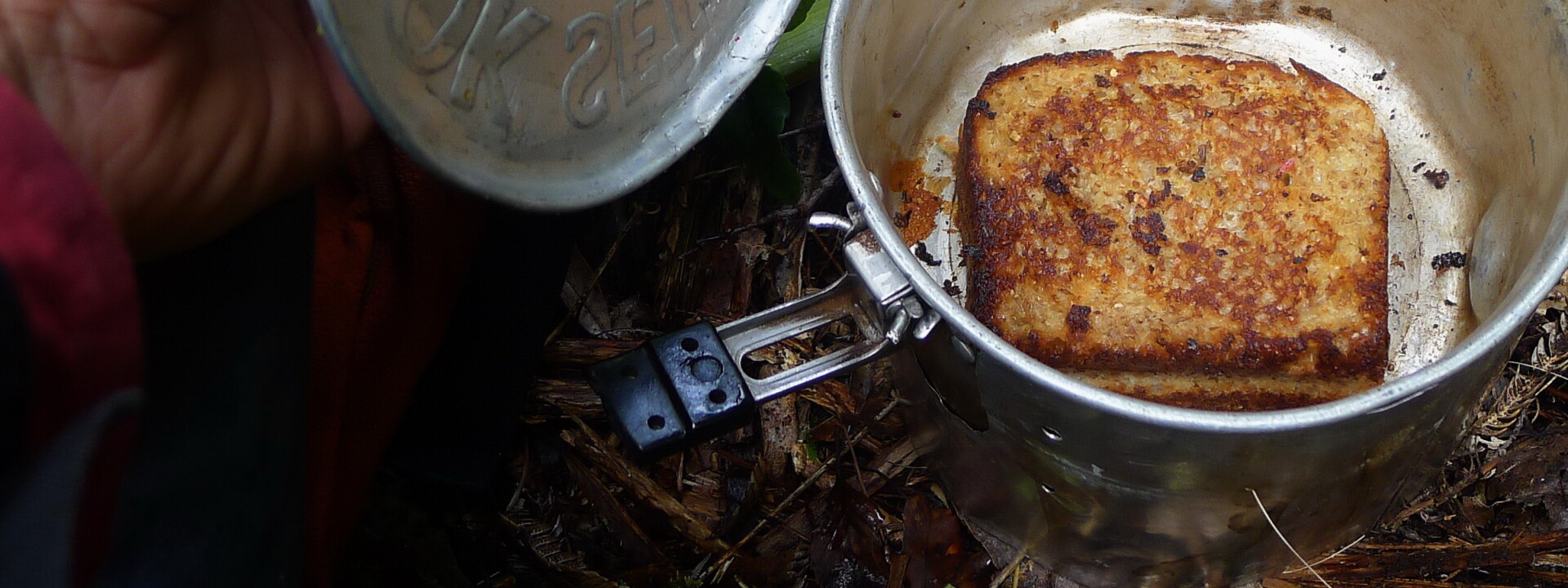
Our Suggestion - try it "cowboy style". Simply put your fresh coffee grounds in the bottom of the billy (pot with wire handle) and pour the required amount of just boiled water over the top. Tap the side of the billy a few times with a spoon (not sure what this does, someone told me it breaks the surface tension - yeah right). Then go outside of the hut or tent and make sure there is nothing above you - low flying aircraft etc. Start swinging the billy around and around a complete 360 degree circle (vertically). I go in both directions about 10 times each. Be careful when you bring it to a stop, you might spill some! This is not as hazardous as it sounds, but do take care all the same. After the spin the grounds will have settled to the bottom of the billy, so you can scoop out your fresh espresso. A quick boil (5 seconds) will sink any rogue floaters you may have. Using a fine grind (espresso) can also help the grinds to settle quicker.
WARNING - do not attempt this if you are not a confident swinger, if you get cold feet halfway through the maneuver you might end up with a pot of hot coffee over your head and chances are you will be a few hours away from medical care! Also check the handle on your billy first! Attempt cowboy coffee at your own risk and perhaps perfect your swinging technique with cold water at home first.
Come on baby light my fire
Here is another hot tip in a series of helpful hints for hikers that will make life safer and more comfy in New Zealand's outdoors.
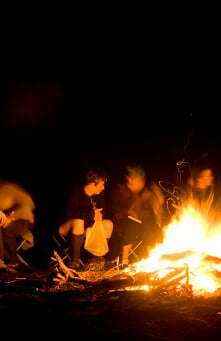
Nothing like sitting around a crackling fire after a hard day in the hills eh. Make sure you know how to light one though, because if sitting around one is the best thing, not being able to get a decent one going is the most embarrassing thing (especially if you are a bloke).
Like anything, to be assured of success it pays to plan ahead. Always have your matches or lighter in a waterproof container, carry a candle stub, or a scrap piece of rubber. You could even chuck in a couple of little lucifers (but that could be cheating a bit). Next go collect your wood, if you are lucky the campsite or hut you are staying at will have had some considerate bush wise people staying there before you and they would have collected and stored some wood before they left. If this is not the case, gather your wood, remember dead standing wood is the best. Such as the branches of trees that have fallen but are left sticking up in the air and not in contact with the ground. If it makes a real crisp ‘thwaaack’ sound when you break it, it should be pretty dry. Collect some dead Beech tree branches as the small leaves burn well when starting the fire. I like to make a platform or lattice style of fire, as you can load plenty of wood on to it while still allowing good airflow and you can poke your candle or piece of rubber underneath to help it along. Start with your smallest and driest material adding the bigger stuff once it’s going well.
If you are heading into an area that is particularly wet, and it is winter time or early spring, then chances are a lot of the wood around will be pretty damp. It's times like this it pays to be a little cunning and take a bit of kindling and newspaper from home. And if you are likely to have anyone in your party that needs slowing down, why not slip a couple of nice tinder dry pieces of firewood in the bottom of their pack? They will forgive you once you have that great fire going!
Putting out the fire!
I know it just seems wrong to douse a roaring fire, but the consequences of leaving a fire unattended can be disastrous. So always put the fire out completely when leaving the hut/camp. If you are in a hut and you decide to clean out the fire and remove the embers/ashes, put them in a bucket and fill the bucket with water, just in case any of those embers spark up in the breeze. Or if you have had a camp fire, tip a couple of buckets of water on it and spread out the embers to stop the heat building up again. Better still chuck some dirt or sand on top to suffocate what sparks may be left.
Handy hint – Kaikawaka (NZ Cedar) is fireproof, so learn what this tree looks like, so you don’t waste too much time trying to get a fire started with this type of wood! It's commonly found in Nelson, Westland, the Catlins and the Ruahine Range.
Stick em up
Here is the third in a series of helpful hints for hikers that will make life safer and more comfy in New Zealand's outdoors.
We often break and rip gear in the mountains on tough trips - raincoats, dry bags, packs, overtrousers, tents (and guides!). It’s a pain taping them up then later removing the gluey tape and trying to repair properly – especially if you need to keep stuff water tight. We often glue stuff these days as it is fast and lasts. Sometimes stitching just weakens older fabric too much and tape is not always the answer (especially around zips) and not a long term solution as UV disintegrates the backing tape quickly in NZ. We sometimes even take along a small tube of urethane glue on a trip – this is the type of adhesive used to glue wetsuits (although we rarely we take our wetsuit tramping). Urethane glue is great for fixing tears in fabrics, without the need for stitching. You can make permanent waterproof repairs in the field with no effort. Urethane glue is available from hardware stores. It’s expensive but it sticks! It takes 12 hours to dry (unless you use the McNett Seam Grip Seam Sealer with the fast set gunk) so make your repairs in the evening so the glue can dry overnight ready for the next day of hammering.
You can glue a patch of something on top to make the repair look better or just smear the urethane glue all over the place if it’s not your Sunday best. Use some petrol (ideally methylated spirits as it’s a ‘polar’ solvent) from your cooker to clean the fabric first if you can, but this glue is pretty forgiving. Once a tube is open it doesn’t last long – perhaps a year at the most. So make sure you break lots of stuff all at once. If the tube has ‘gone off’ just cut it in half and there should be some liquid in the middle that you can make do with for the last repair.
If you do choose to use tape, duct tape is not the only answer. We find the zinc oxide backed sports strapping tape is excellent on fabric. It doesn’t look waterproof as it usually has a cloth backing, but it is. Sticks better in the damp and if you warm it up first it will stick even better. It’s the only tape that will stick to a politician – now that’s a quality product!
Check your plastic bag or dry bag for leaks.
Here is another in a series of helpful hints for hikers that will make life safer and more comfy in New Zealand's outdoors.
Plastic bags and dry bags are important kit for keeping your gear dry when you cross a river or it rains. But it’s hard to tell by looking at it whether your plastic bag or dry bag is waterproof. Here are two techniques:
1. Simply turn the bag inside out, semi-fill with water, and look for leaks. Turn it back the right way and you can use it straight away if needed. We never remember to check our bags until we are actually packing our pack so this last trick is a good one so your stuff doesn’t get rammed into a wet bag! Don’t fill the bag with water as that’s a lot of stress on a bag – you might bugger it!
2. Fill the bag with air, seal off, and then squeeze the heck out of it. If it’s quiet and there’s no wind rustling in your ears you can both hear and feel any air coming out. Run your open mouth back and forth a few centimetres from the bag surface – like some sort of demented lizard – and you will feel any escaping air on your lips and tongue. Weird we know, but it works! See Tip #3 to fix your leaks.
Always pack some emergency rations
Here is the first in a series of helpful hints for hikers that will make life safer and more comfy in New Zealand's outdoors.
If you are heading off on an overnight hike or exploring a remote area on a challenging day trip you should always take spare food for emergencies. You never know what might happen. Accidents occur at any time and rivers can rise without warning. Some people get lost too, remarkable as it sounds…
A good spare rations kit for an extra night can be as simple as 150 grams of rice per person per day and some flavouring, such as soup sachets and dry chillies. Include a bit of milk powder and sugar and hey presto you’ve got rice pudding for breakfast – you’d never get that at the Hilton ay? For a day trip a half dozen snack bars works as you probably don’t have a pot or cooker with you.
Surprisingly, it’s your ability to make good decisions that seems to suffer as much as your pace when you run out of kai (food). Physically most folk have got a few days of walking in ‘em, as long as they stay warm and hydrated. One of our mates got lost in Russia at 6000 metres once and went for 10 days on a couple of Mars Bars and a few cuddles at night time with his mates! He seems no less normal now than when he left. So with a little planning, you won’t go hungry, and you can eat with true style when you spend another night in the bush (known in kiwi lingo as being ‘benighted’ – nothing to do with the Queen of course).
Safe tramping.